Inhale
4sExhale
6s
4sExhale
6s
Ready—
Session length≈ 60 cycles
Suggested positions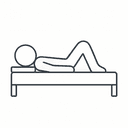 Lying Down - Knees FoldedRecommended
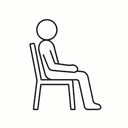 Seated - Back Rested
Lying Down - Knees FoldedRecommendedSeated - Back RestedSteps
- 1Find a comfortable position:
- 2- If lying down: Lie on your back on a flat surface or in bed, with your knees bent and your head supported. You can use a pillow under your knees to support your legs
- 3- If seated: Sit comfortably, with your knees bent and your shoulders, head and neck relaxed
- 4Place one hand on your chest and the other on your belly below the rib cage
- 5Breathe in slowly through your nose for 3 seconds, allowing your belly to push your hand out
- 6EXHALE WITH PURSED LIPS AND ABDOMINAL ENGAGEMENT:
- 7Purse your lips: Create a small opening between them, as if blowing through a straw or gently cooling a hot spoonful of soup
- 8Begin the exhale: Start breathing out slowly through your pursed lips for 6 seconds
- 9Allow your belly to fall naturally inward: As you exhale, your belly gently moves inward toward your spine. Don't force the movement; it should feel smooth and natural
- 10Feel the hand lower: The hand resting on your stomach will provide feedback, sinking inward as your belly naturally relaxes and your diaphragm releases
- 11Visualize the action (choose what works for you): The deflating balloon - Think of a balloon in your stomach slowly deflating, OR The natural release - Consider how your belly naturally softens and settles
- 12Focus on the sensation: The chest should remain relatively still throughout. Focus on the gentle, steady inward motion of the abdomen over the full 6-second exhale
- 13Keep the exhale gentle and controlled - never forced
- 14Repeat this pattern continuously for 5-10 minutes, working up to 10 minutes per session
- 15Practice 3 times per day for at least 2 weeks for optimal pain reduction benefits