Inhale
5sExhale
7s
5sExhale
7s
Ready—
Session length≈ 50 cycles
Suggested positions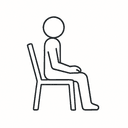 Seated - Back ErectRecommended
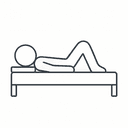 Lying Down - Knees Folded
Seated - Back ErectRecommendedLying Down - Knees FoldedSteps
- 1Positioning: Beginners should start lying supine with knees bent and feet flat (makes diaphragmatic movement most perceptible). Progress to seated after 1-2 weeks: sit on chair with feet flat and spine lengthened, OR cross-legged on cushion with hips elevated above knees. Pregnant women (2nd-3rd trimester) must use left-side lying position only. Practice on empty stomach (3+ hours after meals) in a quiet, comfortable space.
- 2Establish Baseline Awareness: Observe your natural breathing for 1-2 minutes without trying to change it. Notice the rhythm, depth, and which parts of your body move. This settles the nervous system and establishes your starting point.
- 3Hand Placement: Place one hand on upper abdomen (just below ribcage) and the other on upper chest (near collarbone). The lower hand should rise prominently during inhalation while the upper hand moves minimally.
- 4Phase 1 - Abdominal/Lower Lung (40% of inhale, ~2 seconds): Inhale slowly through your nose, directing breath to the lowest part of your lungs. Feel your diaphragm descend as your belly expands outward and slightly downward toward your pelvis—not just upward. Your lower hand should rise while your upper hand stays relatively still.
- 5Phase 2 - Thoracic/Mid Lung (35% of inhale, ~1.75 seconds): Continue inhaling without pause. Expand your ribcage laterally and anteriorly (sideways and forward) like an umbrella opening. Feel your ribs widening three-dimensionally. Both hands should now be moving.
- 6Phase 3 - Clavicular/Upper Lung (25% of inhale, ~1.25 seconds): Complete the inhalation by filling your upper chest and clavicular region. Your upper chest rises subtly upward—avoid excessive shoulder elevation. This ensures complete upper lobe ventilation. Total inhale: 5 seconds, progressing smoothly like a wave, not in jerky stages.
- 7Sequential Exhalation (7-8 seconds): Reverse the sequence: Release breath from upper chest first (clavicles soften downward), then mid-ribs return to neutral, finally draw navel gently back toward spine as lower abdomen contracts. Ensure complete but not forced exhalation. Breathe through your nose. Practice at 75% of maximum capacity—never strain to completely fill or empty lungs. Keep entire cycle smooth and fluid like a wave motion. Maintain relaxed face, jaw, and shoulders throughout.
- 8Duration & Frequency: Beginners: 5-10 minutes, 2-3 times daily. Established practitioners: 10-20 minutes, twice daily. Minimum effective dose: 5 minutes twice daily. Timeline for benefits: Immediate HRV effects; 4-8 weeks for anxiety reduction; 8-12 weeks for cardiovascular benefits; 4+ months for respiratory improvements (COPD).
- 9Integration & Safety Monitoring: After practice, return to natural breathing for 1-2 minutes. Notice any changes in your state (calmness, alertness, body sensations). Stop immediately if you experience: persistent dizziness, chest pain or pressure, severe shortness of breath, irregular heartbeat, numbness that doesn't resolve, or significantly increased anxiety. Return to normal breathing and seek medical attention if symptoms are severe.